
CASE STUDY | SPECIALTY PACKAGING SOLUTIONS
Shipping Fragile Glass Sheets Across 1,300 Miles: A Reusable Packaging Case Study
The Challenge
Shipping ultra-thin, fragile glass presents a unique set of constraints that standard packaging cannot address. The glass was destined for a clean room environment, which meant zero tolerance for Foreign Object Debris (FOD). Traditional methods — such as shipping glass on edge — were not viable given the extreme thinness of each sheet.
Three core requirements shaped the solution:
The glass had to travel 1,300 miles by truck, arriving undamaged. No FOD could be generated at any point, as the product moved from one clean room to another. And the packaging had to remain cost-effective across thousands of shipments over multiple years.
The Solution: Purpose-Built Reusable Containers
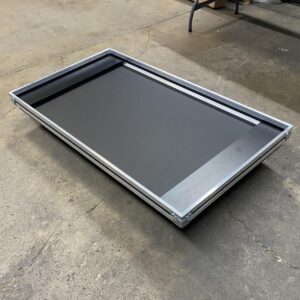
The team designed and built a fleet of reusable shipping containers, each holding 72 glass sheets stacked horizontally. Here is how each element of the design addressed the stated requirements.
Glass stability: Each sheet was placed flat on a ½-inch thick plastic honeycomb panel to prevent flexing during transit. The honeycomb panels were supported along their two long edges inside the container — similar in concept to a bakery rack — allowing for smooth, ergonomic insertion and removal from the short end.
FOD prevention: The interior walls were lined with polyethylene (PE) foam on all four sides to absorb movement and protect the glass. To prevent the foam itself from generating debris, it was encased in a heavy, multi-layer flexible film.
Glass retention: One of the final open questions at the design review stage was how to secure each sheet to its honeycomb panel. Rather than speculate, the engineering team brought this question directly to the customer. The lead engineer offered a practical answer on the spot: non-residue tape. Clean, simple, and effective.
Cost Analysis: Each container cost over $6,000 to build. At first glance, that figure gives pause. However, the economics become clear when viewed at scale. With 72 sheets per container and a minimum of 100 trips, the amortized cost drops to less than $1.00 per glass sheet. Return shipping of the containers adds some cost, but the total remains well below any single-use packaging alternative. In practice, the containers far exceeded the 100-trip estimate — with zero damage reported throughout the program.
—
Operational Refinement: What We Learned
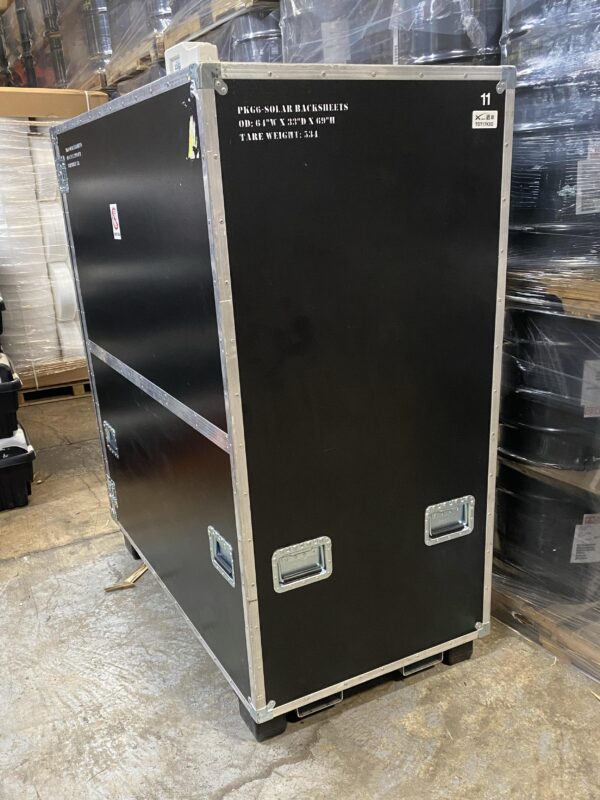
The original design included locking casters on each container. It seemed like a practical choice for mobility. In practice, casters accumulated dirt as they rolled in and out of trucks — a direct FOD risk. The fix was straightforward: remove the casters from the containers and instead build dedicated facility carts that stayed inside each building. Forklift tubes were added to the bottom of each container, allowing them to be lifted onto the carts cleanly and without wheel contact with outdoor surfaces.
—
The Detail That Made the Difference
Why 72 sheets per container? That number was not arbitrary. It was determined by calculating the maximum comfortable working height for inserting and removing sheets. A container that was too tall would create a daily ergonomic burden for the operators. The right capacity was the one that worked well for the people using it every day.
That kind of detail, listening closely to requirements, involving the customer early, and thinking through end-user experience is what separates a good packaging solution from one that creates new problems. The details make all the difference.